Medicinal
Peine de Mico
Apeiba tibourbou Aubl.
Mexico to tropical South America
Fun factDaniel Janzen describes the spiny fruit as a megafauna fruit. Spiny pocket mice can live entirely on its rich, fat-coated seeds, yet they struggle to break open a whole fruit (ACG).
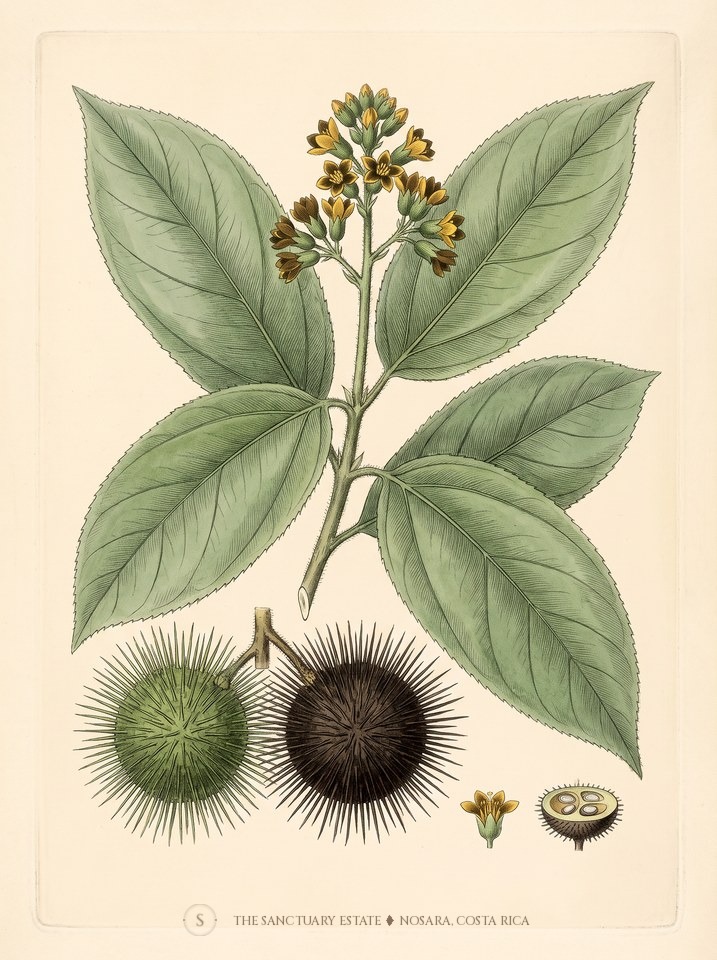
A fast-growing, deciduous pioneer tree of secondary forest, clearings and roadsides, common in Guanacaste where dry forest is regenerating. It is best known for its fruit, a flattened, dark brown to black capsule covered in long, flexible spines that looks like a sea urchin, and that often lies in numbers beneath the tree. It also has large, rough, hairy leaves with three main veins from the base, gray bark that peels in strips, and small, sweetly scented yellow flowers.
Sourced · see Record tab
Wildacross the estate
FamilyMalvaceae
Spanish namePeine de mico
Also known asMonkey comb, Monkey's comb, Peine de mico, Peine mico, Burillo
Native toNative from Mexico through Central America to tropical South America, also Jamaica, Trinidad and the Windward Islands; in Costa Rica it grows only on the Pacific slope, from northwestern Guanacaste to the Valle del General.
Grows wild across the estate.