Medicinal
Jícaro
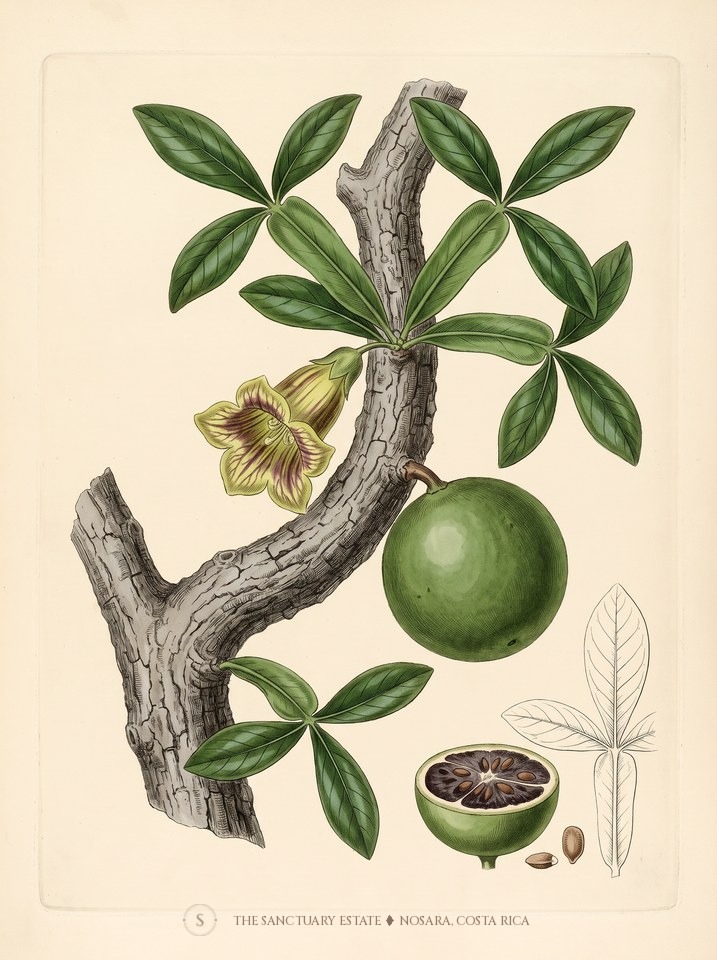
Crescentia alata Kunth
Mexico to Costa Rica
Fun factDaniel Janzen measured that cracking a ripe jícaro takes about 200 kg of force. Free-ranging horses in Santa Rosa bite them open, eat the pulp and pass the seeds unharmed, likely doing the job of extinct Ice Age horses.
A small, open-crowned tree of the Pacific dry forest, with crooked branches, fissured gray bark, and three-part leaves on winged stalks. Flowers and hard round fruits grow straight from the trunk and older branches. In Guanacaste it is typical of pastures, old fields and deciduous forest, often on heavy clay soils. Its fruits drop green and ripen on the ground, where horses and cattle break them open and spread the seeds.
Sourced · see Record tab
Wildacross the estate
FamilyBignoniaceae
Spanish nameJícaro
Also known asJícara, Ayale
Native toNative from Mexico through Guatemala, El Salvador, Honduras and Nicaragua to Costa Rica, mainly on the Pacific slope; introduced in Panama and elsewhere.
Grows wild across the estate.