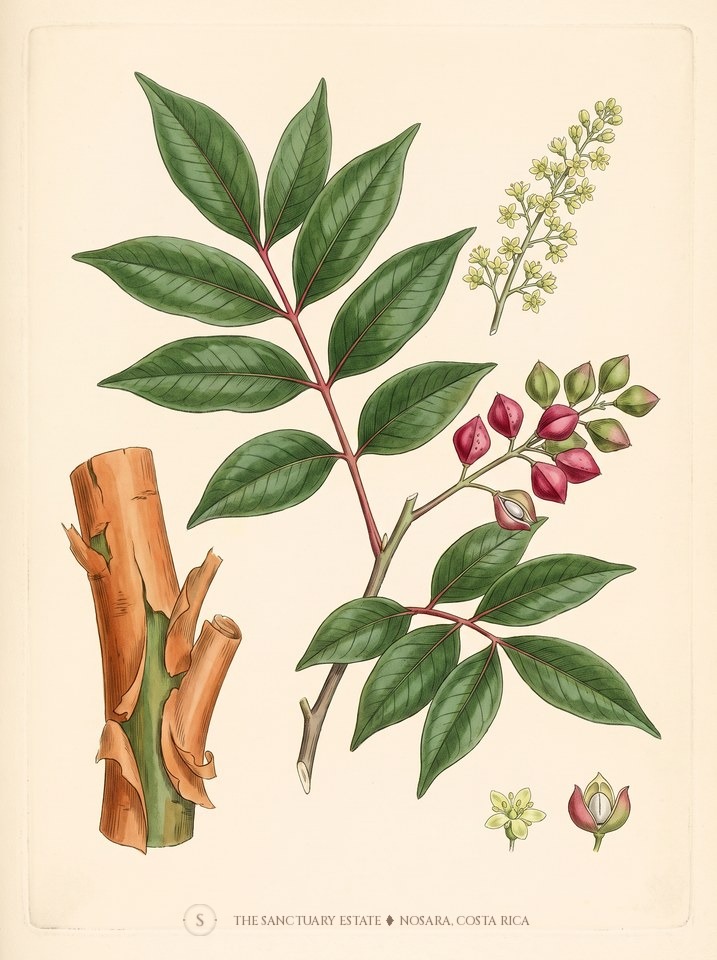
Medicinal
Indio Desnudo
Bursera simaruba (L.) Sarg.
Florida and Mexico to northern Brazil
Fun factThe orange bark contains chlorophyll, so the tree keeps photosynthesizing through its bark during the dry season after it has dropped its leaves (Área de Conservación Guanacaste).
A deciduous tree of seasonally dry tropical forest, best known for its smooth, copper-orange bark that peels in thin papery sheets to show green bark beneath. Male and female flowers grow on separate trees. In Costa Rica it is common in dry forest and secondary growth, and it is widely planted as living fence posts, so old fence-post trees often turn up in regenerating forest.
Sourced · see Record tab
Wildacross the estate
FamilyBurseraceae
Spanish nameIndio desnudo
Also known asGumbo-limbo, Turpentine tree, West Indian birch, Tourist tree, Copperwood
Native toNative from the Florida Keys and Mexico through Central America (including Costa Rica) and the Caribbean to Colombia, Venezuela, the Guianas and northern Brazil.
Grows wild across the estate.