Giant · Medicinal
Baobab
Adansonia digitata L.
Tropical Africa and Arabia
Fun factBaobabs store water in their swollen trunks to survive drought, which makes them a target for thirsty elephants. Radiocarbon dating has shown that very large African baobabs can be extremely old, and the species is protected under South Africa's Forest Act of 1941.
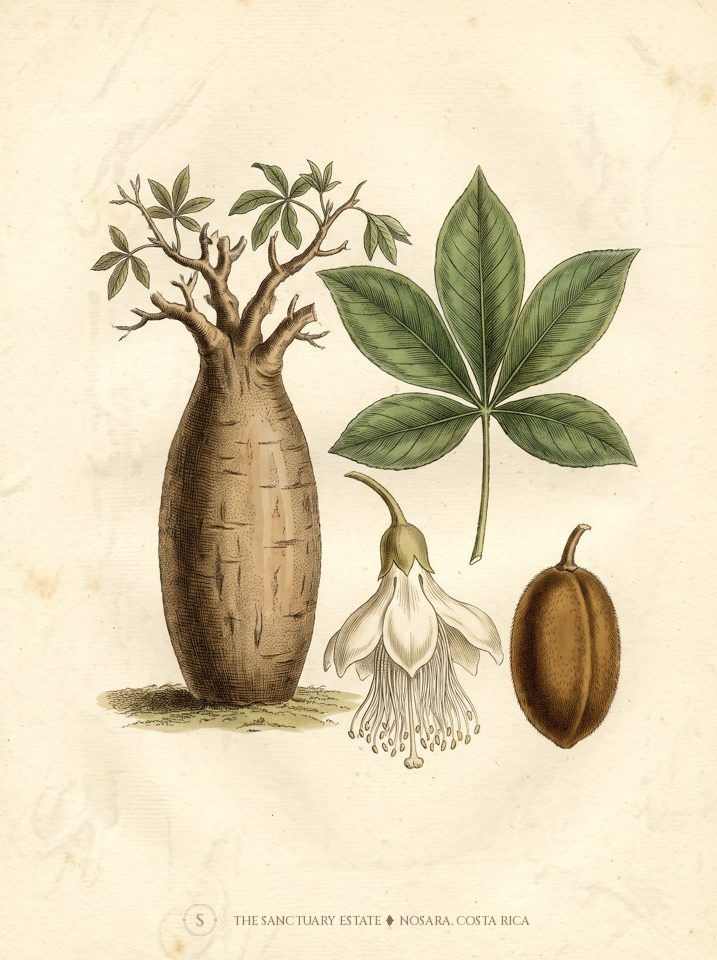
A massive, fat-trunked tree of dry African grasslands and woodlands, with a trunk girth commonly 3–10 m and occasionally far more. The thick, fibrous trunk stores water and resists fire, termites and drought, and its bare branches in the dry season give it the look of a tree planted upside down. Large white flowers hang singly on long stalks and are followed by hairy, gourd-like fruits with a dry, powdery, sour pulp.
Sourced · see Record tab
4on the estate
3carrying a tag
1sponsored
FamilyMalvaceae
Also known asAfrican baobab, Upside-down tree, Monkey bread, Cream of tartar tree
Native toTropical and southern Africa and the southern Arabian Peninsula, in seasonally dry tropical country
| Tag | Garden area | Zone | Planted | Status | Sponsored | Note |
|---|---|---|---|---|---|---|
| 241 | Baobab Enclave | B | 17 June 2016 | Healthy | Michael L., Germany | |
| 242 | Baobab Enclave | B | 17 June 2016 | Healthy | — | |
| 243 | Baobab Enclave | B | 17 June 2016 | Healthy | — | |
| — | — | — | 24 May 2018 | Planted | — |
1 of these has no tag yet; it will be numbered when the garden team re-tags the estate.