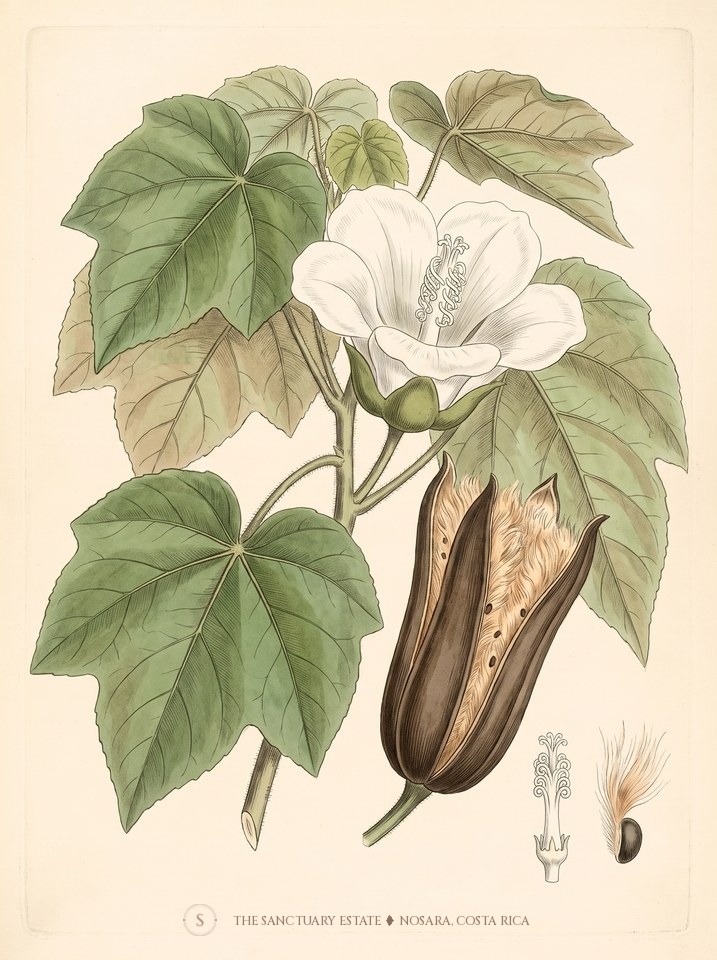
Tree
Balsa
Ochroma pyramidale (Cav. ex Lam.) Urb.
Southern Mexico to Bolivia
Fun factIn central Panama, researchers watching balsa trees from scaffolding towers recorded 22 vertebrate species feeding at the flowers. Kinkajous were the most frequent visitors, and white-faced capuchins would tear the petals open to reach the nectar (Kays et al. 2012).
Balsa is one of the first trees to colonize clearings and forest gaps in the American lowlands, and its rapid growth produces the lightest commercial wood in use. The name means raft, given by Spanish settlers who saw Indigenous people build rafts from the wood. Its large, cup-shaped white flowers open near sunset, each for a single night, and fill with nectar that draws kinkajous, opossums, bats, birds and monkeys.
Sourced · see Record tab
Wildacross the estate
FamilyMalvaceae
Spanish nameBalsa
Also known asBalsa tree, Corkwood, Down tree, West Indian balsa, Balso
Native toNative from southern Mexico through tropical America, including Central America, the West Indies and South America to Bolivia, and found in almost all of Costa Rica except the highlands.
Grows wild across the estate.